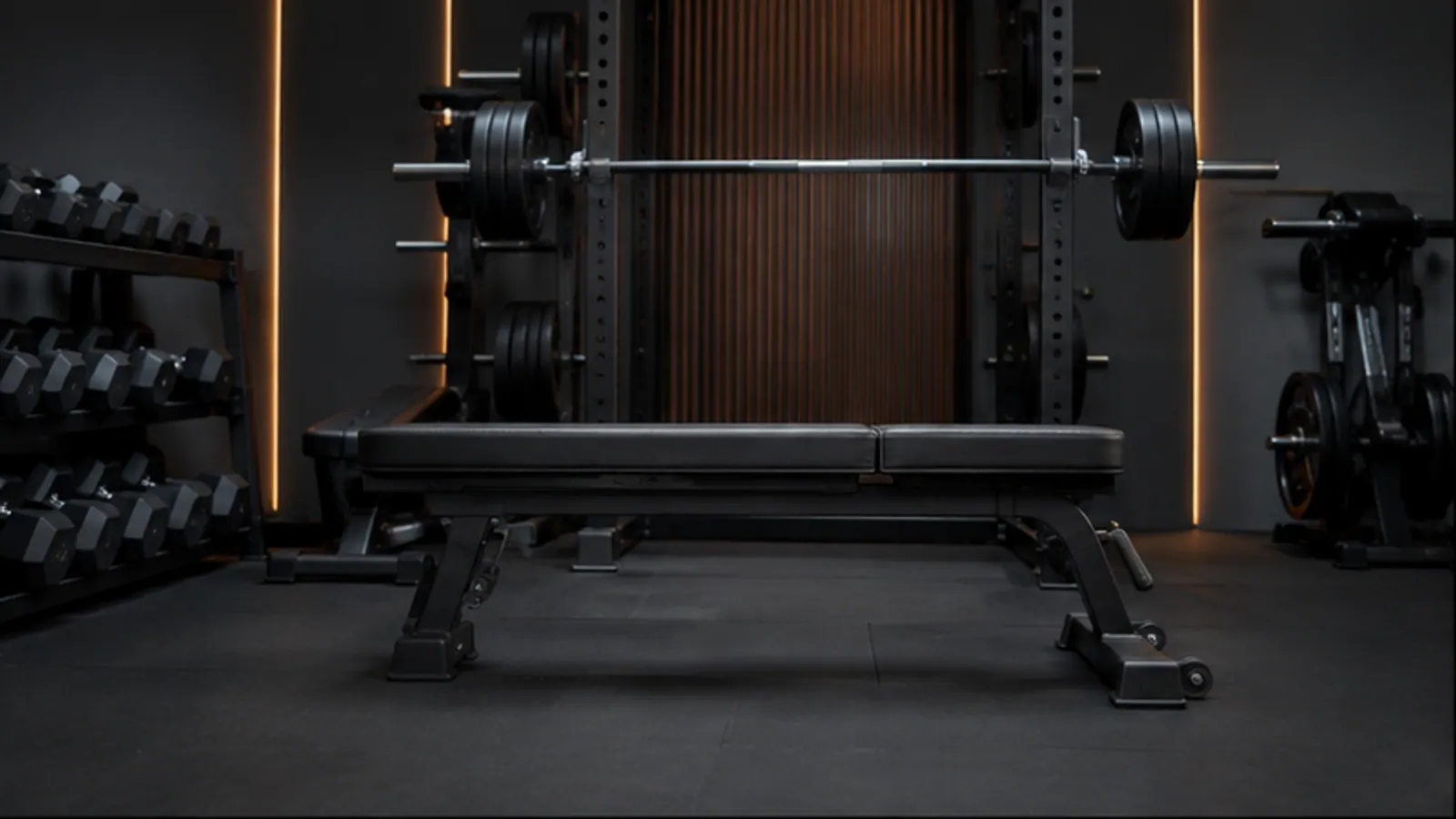
Test the gap with your body position
Lie down in your normal flat-bench position and note where the pad junction sits relative to the pelvis and lower back.
Repeat with different users; torso length changes whether the same opening is noticed at all.
Look below the upholstery
A moving zero-gap mechanism adds rails, pivots or locks that must stay aligned and free of play.
Inspect pinch points, fasteners, upholstery clearance and access for cleaning before valuing a smaller opening.
Compare use through every angle
Raise the back and seat through planned positions and check that the junction does not create a ridge or trap clothing.
Try dumbbell presses, rows and split squats because contact points differ from barbell benching.
Approve the complete bench
Compare overall pad length, flat height, frame stability, transport and storage as well as the stated gap.
Request the exact adjustment sequence and replacement-part details for the model and test it unloaded before purchase.
- Compare multifunctional racks
- B03
- Standard vs Wide Bench Pad: Which Width Fits Your Training?
- Check rack depth for your room