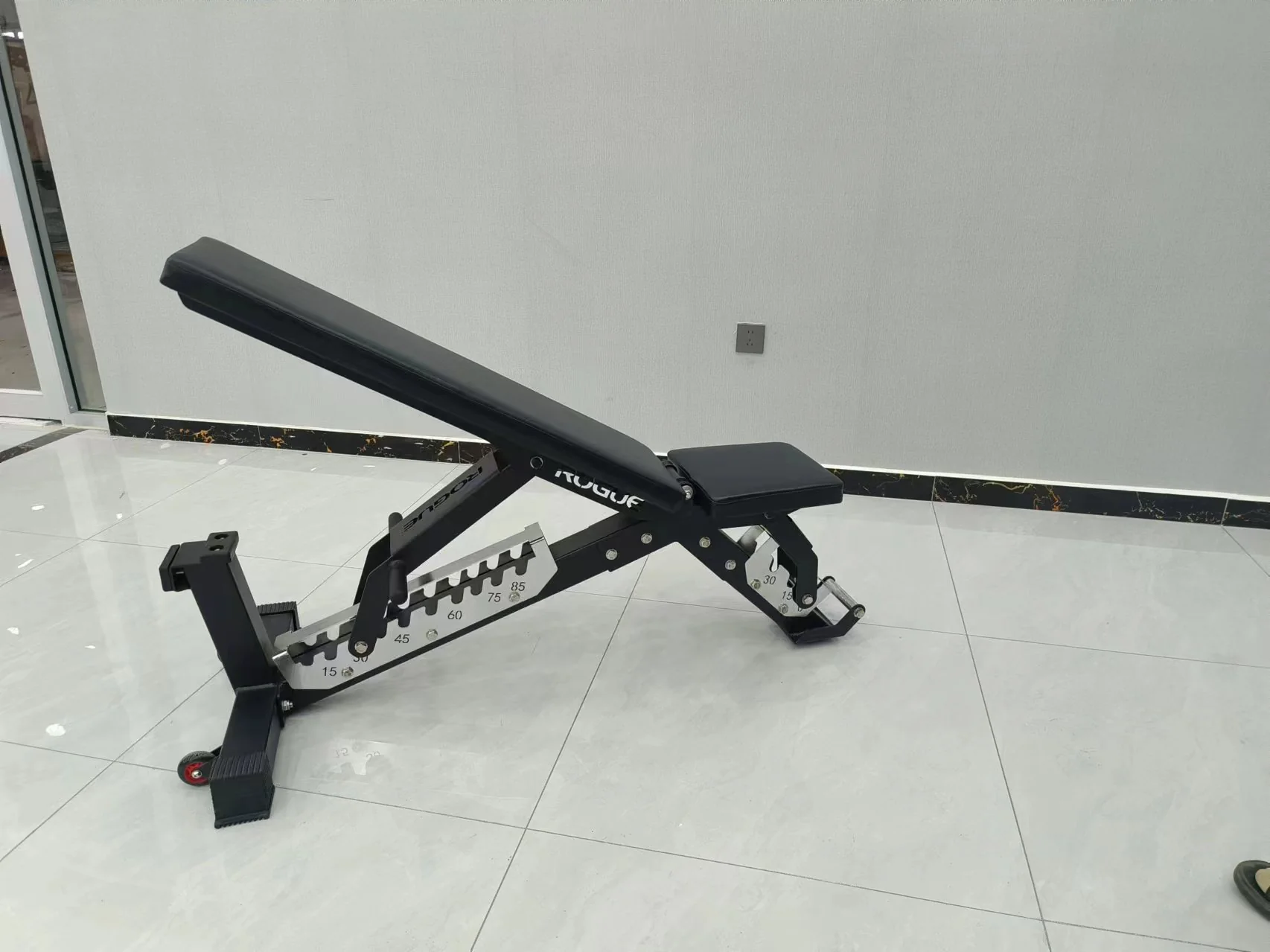
An adjustable bench is handled, moved and repositioned repeatedly. A buyer checklist should therefore cover the full mechanism and its fit with the intended rack—not only the number of backrest angles.
| Area | Check | Buyer impact |
|---|---|---|
| Frame | Stable contact and controlled movement | Confidence under load |
| Adjustment | Positive engagement at every position | Repeatable setup |
| Pads | Support, seams and upholstery finish | Comfort and presentation |
| Mobility | Handle, wheels and balance | Easier room changes |
| Compatibility | Rack depth and bar path clearance | Usable exercise positions |
1. Check stability in flat and inclined positions
Review the contact points and frame movement at each intended position. The bench should sit predictably before the user adds a barbell or dumbbells.
2. Inspect every adjustment engagement
Move the backrest, seat and any head or leg support through the full range. Confirm that pins, ladders or locking points engage clearly and are accessible to the user.
3. Review pads as replaceable product components
Check pad dimensions, upholstery seams, edge finish, attachment points and the process for replacing worn upholstery. Record the chosen color with the frame finish.
4. Test transport before approving a bulk order
Use the handle and wheels on the type of floor expected at the destination. A heavy bench that is awkward to move creates problems for home users, studios and installers.
5. Confirm rack and exercise clearance
Place the bench in the intended rack positions and check the head end, feet, uprights, bar path and cable attachments. Compatibility should be shown in the approved configuration.